
Symposium Program
Monday, November 9 (University of Würzburg, M2, A109)
| 09:00-17:00 | Kieker Developer Meeting |
Tuesday, November 10 (infosim)
| 09:00 – 09:30 | Registration and Get Together |
| 09:30 – 09:40 | Opening and Welcome Note |
| 09:40 – 09:55 | Short Reports on Palladio, Kieker, and Descartes |
| 09:55 – 10:20 | Keynote 1 – usbvfiod: Insights into the Performance Aspects of USB Passthrough (Lukas Beierlieb, Cyberus Technology) |
| 10:20 – 10:40 | Coffee Break |
| 10:40 – 12:00 | Session 1: Tracing, Observability & Overhead |
| 12:00 – 13:10 | Lunch Break |
| 13:10 – 13:35 | Keynote 2 – The bottleneck is you: How AI agents take over performance work (Frank Flederer, TNG Technology Consulting) |
| 13:35 – 14:35 | Session 2: Edge, Cloud & Distributed Systems Performance |
| 14:35 – 14:55 | Coffee Break |
| 14:55 – 16:15 | Session 3: Software Evolution, Ecosystems & Tooling |
| 16:15 – 16:35 | Coffee Break |
| 16:35 – 17:15 | Session 4: Kotlin Multiplatform & Instrumentation |
| 17:15 | Closing and End of the First Day Remarks |
| 19:30 | Conference Dinner at Bürgerspital |
Wednesday, November 11 (infosim)
| 09:00 – 09:30 | Registration and Get Together |
| 09:30 – 09:40 | Opening and Welcome Note |
| 09:40 – 10:05 | Keynote 3 – Log Analytics at Petabyte Scale: Performance Engineering from Ingest to Insight (Sören Henning, Dynatrace) |
| 10:05 – 10:25 | Coffee Break |
| 10:25 – 11:45 | Session 5: Benchmarking, Testbeds & Load Testing |
| 11:45 – 12:55 | Lunch Break |
| 12:55 – 13:55 | Session 6: AI Performance, Security & Machine Learning |
| 13:55 | Closing |
Keynotes
usbvfiod: Insights into the Performance Aspects of USB Passthrough (Lukas Beierlieb, Cyberus Technology)
usbvfiod is a USB controller emulation that enables USB device passthrough to cloud-hypervisor VMs.
The emulated controller occupies an awkward position: it must translate the hardware-level interactions of the guest’s USB driver into higher-level requests understood by the Linux kernel’s userspace USB API, and vice versa for device responses.
In this talk, we discuss DMA accesses, request aggregation, context switches, and the ever-present trade-off between performance and security, backed by throughput measurements of USB stick reads.
Lukas Beierlieb is a software engineer at Cyberus Technology and a PhD student at the University of Würzburg, focusing on virtualization technology in both roles.
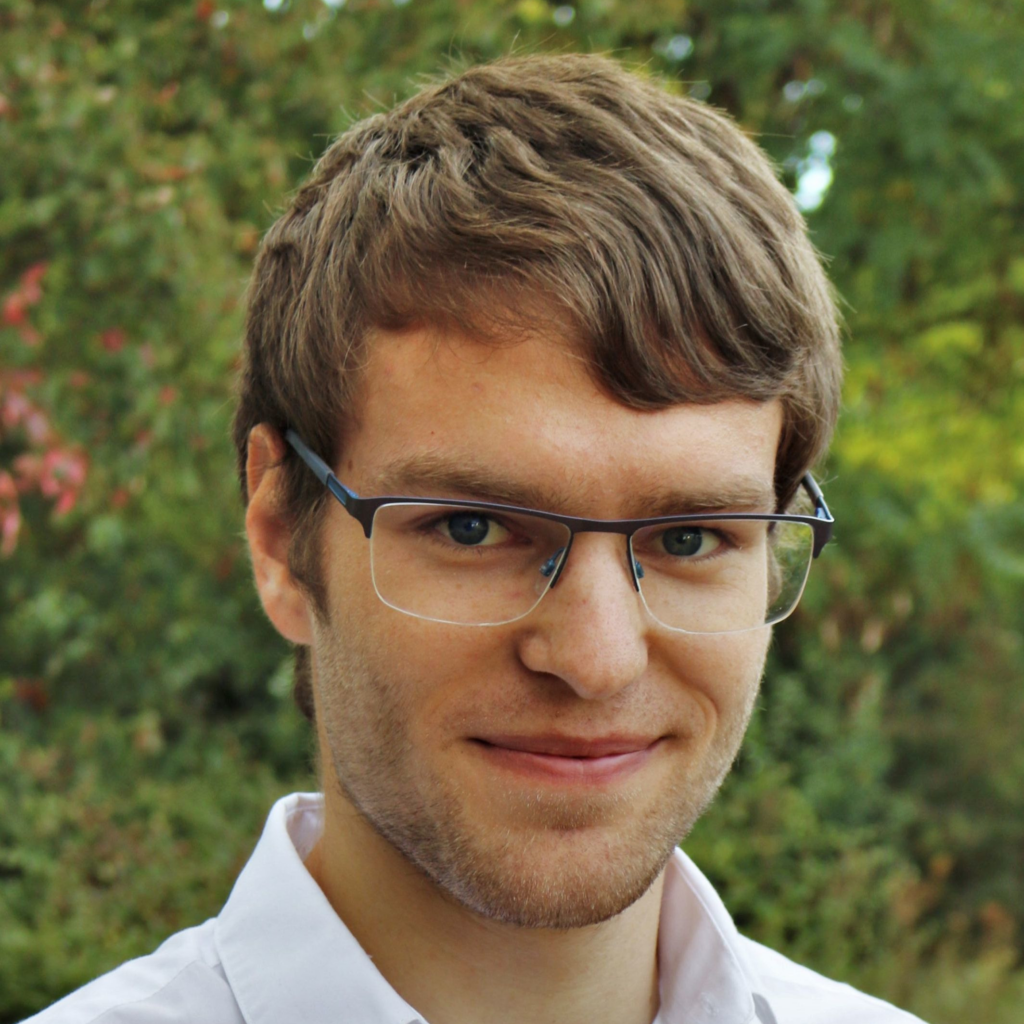
The bottleneck is you: How AI agents take over performance work (Frank Flederer, TNG Technology Consulting)
Performance problems are detected in seconds — answering “why is this slow?” might take days. Closing this diagnosis gap is not a measurement problem but an understanding problem: digging through telemetry, reading execution plans, correlating across team and repo borders, designing fixes that hold. Much of that work is a language task — the interface where LLM agents are strongest today. This talk walks the full performance cycle through real project stories where LLMs helped solving performance issues. The recipe: raw data in, explicit complexity analysis, MCP-connected context — and the human as director.
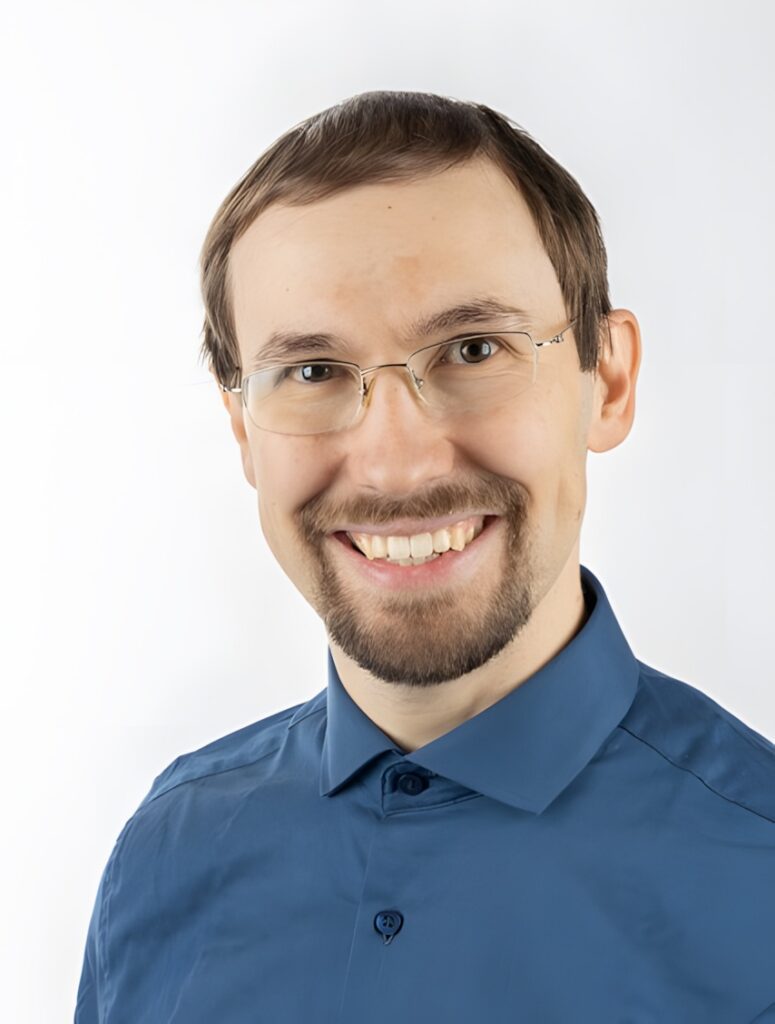
Log Analytics at Petabyte Scale: Performance Engineering from Ingest to Insight (Sören Henning, Dynatrace Research)
Logs are among the most valuable signals for understanding software behavior in production and at Dynatrace we ingest and analyze them at massive volume. Making log analytics scalable, near-real-time, and cost-efficient demands rigorous performance engineering, including intensive benchmarking as well as careful modeling and simulation for different scenarios. We’ll follow logs through our systems, from collection and transfer through matching, transformation and storage to querying and analysis and share our latest research results for each of these steps.
Sören is a researcher on real-time analytics at Dynatrace, working at the intersection of software engineering, distributed systems, and data management. His research focuses on scalable and dependable software architectures, particularly for data-intensive applications in modern cloud environments, as well as empirically grounded performance engineering.
Sessions
Session 1: Tracing, Observability & Overhead
- Overhead Comparison of OpenTelemetry and Kieker in Python
David Georg Reichelt (Lancaster University Leipzig), Shinhyung Yang (Kiel University), Wilhelm Hasselbring (Kiel University) - The Time Measurement Pattern in the JVM
David Georg Reichelt (Lancaster University Leipzig), Shinhyung Yang (Kiel University), Wilhelm Hasselbring (Kiel University) - Understanding and Reducing OpenTelemetry Tracing Overhead in Kotlin Multiplatform
Lorenz Bader (Johannes Kepler University Linz), Markus Weninger (Johannes Kepler University Linz) - eBPF jAgent: Transaction-level Resource Demand Tracing for Java Applications Using eBPF and OpenTelemetry
Bryan Liegsalz (byteleaf GmbH), Andreas Brunnert (Munich University of Applied Sciences HM)
Session 2: Edge, Cloud & Distributed System Performance
- Maven Build Processes of the Model-Driven IIoT Platform oktoflow – A Performance Analysis
Holger Eichelberger (University of Hildesheim) - Ecoscape v2: Declarative Performance Resilience Benchmarking in the Edge-Cloud Continuum
Hendrik Reiter (Kiel University), Wilhelm Hasselbring (Kiel University) - Explaining the Write Performance of Kafka under Hardware-Related Chaos Scenarios
Mika Petersen (CAU Kiel), Hendrik Reiter (CAU Kiel), Wilhelm Hasselbring (CAU Kiel)
Session 3: Software Evolution, Ecosystems & Tooling
- Bringing PlantUML to Kieker: Streamline the Visualization Pipeline Toward Kieker–Jupyter Notebook Interoperability
Yorrick Josuttis (Kiel University), Shinhyung Yang (Kiel University), Wilhelm Hasselbring (Kiel University) - Analysis and Visualization of Kieker’s Software Evolution
Malte Hansen (Kiel University), Daniel Riese (Kiel University), Johannes Klindt (Kiel University), Wilhelm Hasselbring (Kiel University) - Performance Implications of JPMS Adaptation – Experiments with Open-Source Applications Renew and Kieker
Marcel Hansson (University of Hamburg), Daniel Moldt (University of Hamburg) - Revitalizing QPME: Modernizing a Queueing Petri Net Modeling and Simulation Environment
David Linke (University of Würzburg), Nicolas Stadler (University of Würzburg), Nikolas Herbst (University of Würzburg), Samuel Kounev (University of Würzburg)
Session 4: Kotlin Multiplatform & Instrumentation
- MooBench X Kotlin: Kotlin Multiplatform Benchmarking
Jannik Heinzlreiter (Johannes Kepler University Linz), Markus Weninger (Johannes Kepler University Linz), David Georg Reichelt (Lancaster University Leipzig) - Kotlin Multiplatform IR Instrumentation: A Cross-Platform Runtime Overhead Analysis
Lian Hörschläger (Johannes Kepler University Linz), Markus Weninger (Johannes Kepler University Linz)
Session 5: Benchmarking, Testbeds & Load Testing
- Investigating the Warmup Behavior of Software Applications
Jóakim von Kistowski (Aschaffenburg University of Applied Sciences), Elijah Seyfarth (Aschaffenburg University of Applied Sciences), Sebastian Frank (Independent Researcher) - A Configurable Microservice Testbed for Runtime Experiments
Maria Borges (TU Berlin), Sebastian Werner (TU München) - CreoBench: An Open-Loop, Distributed Load Tester for Modern Microservice Benchmarking
Yannik Lubas (University of Würzburg), Martin Sträßer (Aschaffenburg University of Applied Sciences), Ivo Rohwer (University of Würzburg), Samuel Kounev (University of Würzburg) - Designing a data acquisition system for performance in the context of the CMS experiment
Fábio Carneiro (BTU), Leen Lambers (BTU), Zhen Xie (Princeton University)
Session 6: AI Performance, Security & Machine Learning
- Cooking in the Dark: Performance Evaluation of Matrix-Vector Operations in Neural Networks under Homomorphic Encryption
Lukas Horn (University of Würzburg), Lennart Svoboda (University of Würzburg), Simon Engel (University of Würzburg), Thomas Prantl (University of Würzburg), Samuel Kounev (University of Würzburg) - What Does Pruning Actually Buy? Memory and Inference Time in Predictive Maintenance Models
Daniel Grillmeyer (University of Würzburg), Sükrü Turhal (University of Würzburg), Samuel Kounev (University of Würzburg) - When Does Task Decomposition in Root Cause Analysis LLM-Workflows Cause Performance Regressions?
Ivo Rohwer (University of Würzburg), Martin Sträßer (Aschaffenburg University of Applied Sciences), Yannik Lubas (University of Würzburg), Samuel Kounev (University of Würzburg), André Bauer (University of Chicago)